Slips and trips are a common hazard in the workplace, accounting for over a third of all major injuries and can also lead to other types of accidents such as falls from height or into machinery like a forklift truck. As cold weather and darker evening draw in, the risk of slips and trips increases and the causes include poor lighting, excess water from rain and wet and decaying leaves. In this article, we look at the main causes of slips and trips and remedies to avoid them.
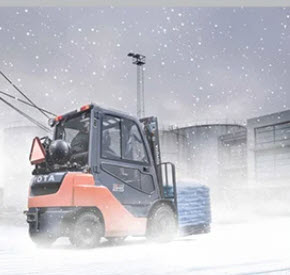
Contamination – This is anything that ends up on the floor like rain water, oil, dust, spills, leaks, overflow, etc. Contamination can be introduced by work activity such as a forklift truck loading and off-loading goods from a lorry outside and moving in and out of the warehouse in adverse weather conditions. The first step is to identify where the contamination is coming from.
The next step is to find ways to stop the contamination reaching the floor. These could include using guards, drip trays, lids, reviewing working practices and entrance matting. If contamination is inevitable, identify other controls to avoid slips like flooring type, cleaning processes and footwear.
Cleaning – Although cleaning is an important way of managing slips and trips by removing the contamination, it also introduces slip and trip hazards by leaving wet floors, cleaning equipment, trailing cables, etc. To avoid slips and trips due to the cleaning process, ensure that the staff are fully trained and use appropriate cleaning detergents. Clean during the quiet periods if possible, leave floors as dry as possible, clean in sections so there is always a dry path or restrict traffic when the floor is wet and use warning signs.
Human Factors – Human behaviour can introduce slip and trip risks. Rushing, carrying large objects that restricts your view, using mobile phones while walking or any other distractions can lead to slips and trips. Ensure spillages are dealt with immediately rather than waiting for someone else to do it. Wear appropriate footwear and train all staff to on the hazards of slips and trips.
Flooring – The flooring at the workplace must be suitable for the type of work carried out. The Workplace (Health, Safety and Welfare) Regulations 1992 (Regulation 12) require floors to be suitable, in good condition and free from obstructions. People should be able to move around safely.
Environment – Environment factors such as lighting, noise, weather, humidity, condensation, etc can increase the risk of slips and trips. Ensure you have appropriate lighting for the environment. Avoid loud or unfamiliar noise as this can distract the staff. Ensure rainwater, ice, snow and condensation does not cause a hazard. Forklift truck operators and staff working outside in adverse weather conditions need to wear appropriate footwear and be trained to avoid risks in these conditions.
Trips – The majority of trips are caused by obstruction and uneven surfaces. Preventing these are often simple and cost-effective. You must ensure that the walkways are suitable for the task. They should be clear of objects, trailing wires and any other obstruction. The floor should be suitable for the environment, fitted correctly, wide enough and level. Forklift truck operators must ensure that if any object that falls from the vehicle are cleared immediately and no pallets obstruct the walkway as they would cause a trip hazard.
Useful Links:
https://www.hse.gov.uk/slips/preventing-overview.htm
https://www.hse.gov.uk/slips/cleancampaign.htm
https://www.hse.gov.uk/slips/casestudies.htm
https://www.hse.gov.uk/pubns/ck4.pdf
https://www.hse.gov.uk/cleaning/topics/slips.htm
Wallace School of Transport including Forklift Training in London is a fully accredited RTITB company with over 60 years’ experience. You can be trained either at your own work site or at Wallace Centre in Park Royal. If you have any questions, call Wallace Forklift Training on 020 8453 3440, choose option 3 or click here to email us.